Pay in installments of $5.40 with
 ,
,
 and
and

Shipping Estimate
USA
- USA
- CAN
- USA
- CAN
Ships within 48 hours · Estimated delivery Aug 13 - Aug 18
 Promo Codes Available:
For Your Every Summer RSVP, with Code: SUMMER15
Description
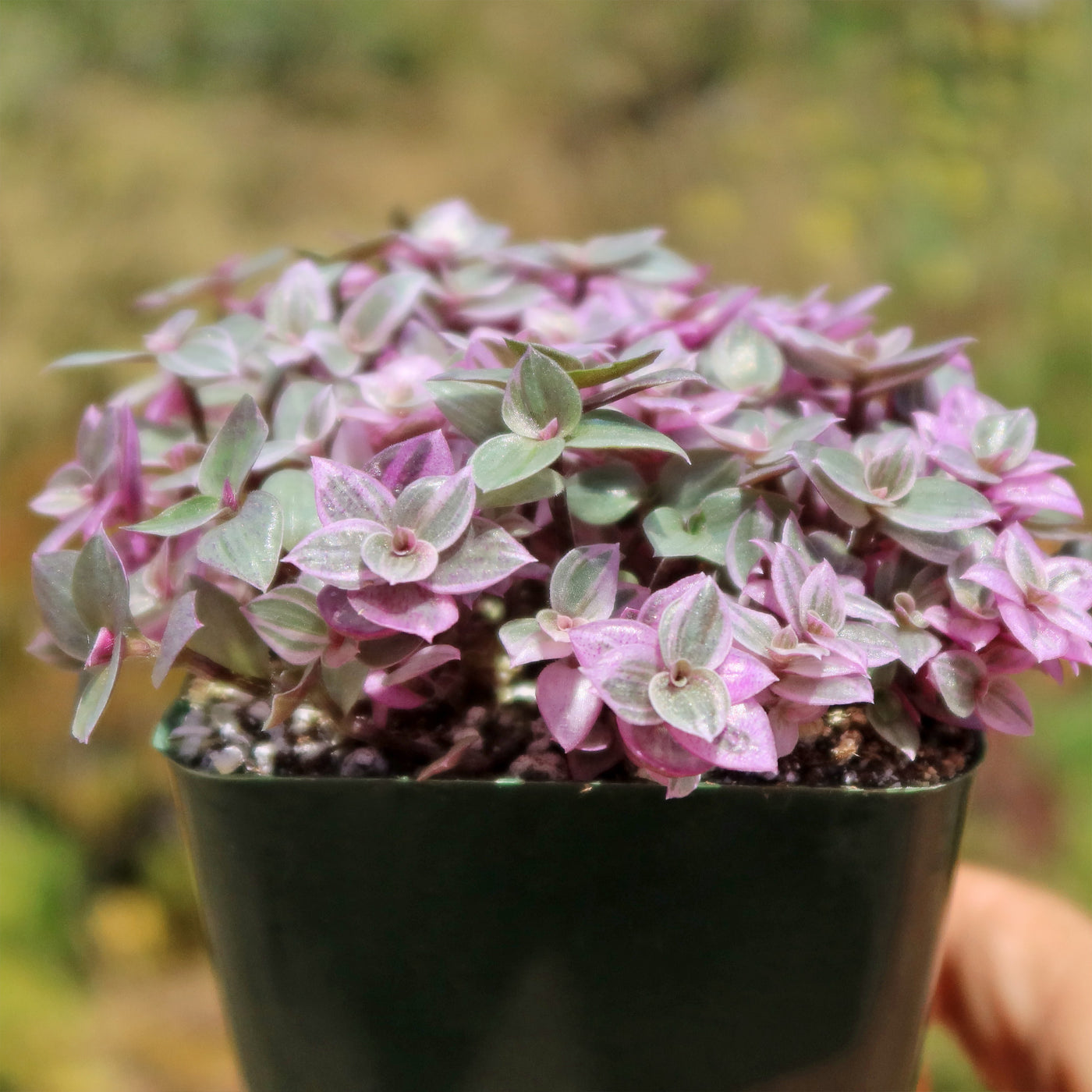
pink lady house plant Pink Lady 'Callisia repens variegated'Welcome to the fascinating world of trailing succulents! If you're looking for a striking and unique addition to your plant collection, look no further than the highly prized variegated variety of turtle vine plant 'Callisia repens variegated' a vibrant member of the Callisia genus, known as Pink Lady, a Creeping inch plant, turtle vine, and pink turtle vine. The variegated pink lady plant, sometimes mistaken for Callisia pink panther, shares
Welcome to the fascinating world of trailing succulents! If you're looking for a striking and unique addition to your plant collection, look no further than the highly prized variegated variety of turtle vine plant 'Callisia repens variegated' a vibrant member of the Callisia genus, known as Pink Lady, a Creeping inch plant, turtle vine, and pink turtle vine.
The variegated pink lady plant, sometimes mistaken for Callisia pink panther, shares similarities with pink and green variegation but differs in appearance and growth habits. Callisia repens pink panther has larger, elongated leaves with a pronounced pink color, while Pink Lady has smaller, rounded leaves with a subtle pink coloration.
This Callisia repens variegated 'Pink Lady' is a low-growing succulent with stems that bear small round waxy leaves. It grows up to 6 inches tall. If given enough time to grow, this succulent can become quite dense and even spill out of containers. Pink lady leaves can grow up to 1 inch long and can be green-striped, pinkish, or creamy with a burgundy underside. It blooms in late spring or early summer with tiny white flowers that have only three petals.
Once the plants have finished blooming, stem cuttings can often encourage a second bloom and help prevent re-seeding. Pink lady Callisia repens is a non-toxic-friendly plant for both humans and pets.
Watering Needs
The pink lady, despite being semi-succulent, prefers moderate watering during the spring and summer growing seasons because it doesn't like completely dry or soggy soil.
When it comes to storing water, this pink lady turtle vine is an absolute rockstar. However, you don't want to overwater this beauty; instead, wait until the topsoil is completely dry before giving it another drink. Remember, underwatering can cause the leaves to wilt and become dry and crispy while overwatering can cause the leaves to turn yellow and fall off. So, it's important to keep the soil moist, but not overly wet, to maintain healthy foliage.
To encourage healthy root development, watering should be done deeply but sparingly in winter when it is in a dormant phase.
Light Requirements
This vibrant Pink lady prefers to bask in at least six hours of bright, indirect light but it is not afraid to soak up some rays in sunny areas. The key is to keep it compact and maintain those gorgeous pink variegated leaves.
But beware, too much sun can lead to burns, so make sure you gradually increase exposure or move it indoors during a heatwave. And if your turtle vine pink lady isn't getting enough light for a longer period, it'll start stretching toward its source, and its color will turn green or fade.
So let's give your Callisia plant what it deserves - just the right amount of light to bloom into the ultimate showstopper!
Optimal Soil & Fertilizer Needs
The pink lady likes very airy, porous, nutrient-rich soil with a pH of 5.5- 6.5. It requires fast-draining soil that dries completely between waterings. Your soil must have a sandy texture and a low water-holding capacity, just like desert soil. Instead, make or buy a well-draining potting mix, or ideally use our specialized potting mix or succulent soil mix that contains over 5 natural substrates and mycorrhizae to promote the development of a strong root system that helps your succulent to thrive.
When it comes to fertilizer, a small amount of natural fertilizer with lower doses of NPK (5-10-5) applied once a year in springtime encourages nutrient absorption and keeps your hanging-inch plant healthy. Remember, never fertilize your variegated turtle vine if it has recently been replanted or if it is experiencing problems, as it is not a medicine. Analyze the plant and make adjustments as needed.
Hardiness Zones & More
The pink lady plants are tropical succulents, these (Callisia plants) typically grow indoors in colder climates. These are hardy in USDA zone 10-11, which means they can tolerate temperatures between 65-75 degrees Fahrenheit.
In cooler zones, it can be kept outdoors during the summer and brought indoors in a bright, sunny window or under grow lights as the temperature drops. It can also benefit from occasional misting to increase humidity around the pink lady Callisia.
We think you will love this trailing plant – order your very own Callisia repens Pink Lady today and start enjoying its beauty in no time in a creeping basket plant!
Shipping Notes
- Free Standard Shipping on $100+ Orders to the USA.
- Except Preorder products are shipped in 48 hours.
- Delivery to the USA:
- Standard Shipping : 3-10 business days
- If time is of the essence, please consider selecting expedited delivery for faster service.
Exchange/Return Notes
- We offer a 30-day return/exchange service after receiving.
- Final sale items are not eligible for returns or exchanges.
- To process your return/exchange, please contact us at [email protected]
- Please click here for more details>>> Return & Exchange Policy